
St Cuthbert’s pupils share ideas for their community with local MP
Pupils at St Cuthbert’s Catholic Primary School have presented their ideas for improving their local area directly to their MP, contributing to discussions about a £20 million investment in Kenton over the next ten years.
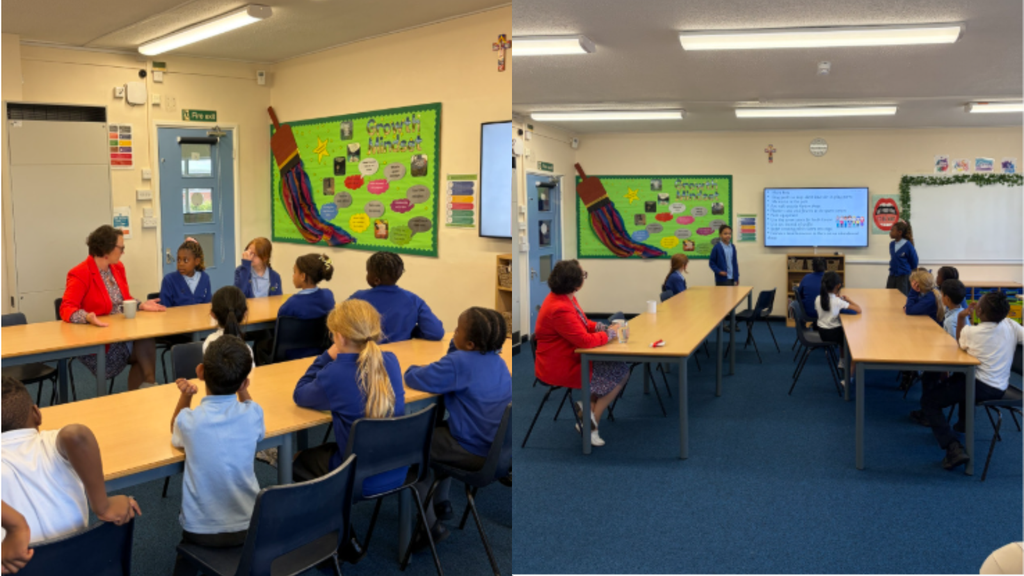
The school’s Student Council welcomed Catherine McKinnell, MP for Newcastle upon Tyne North, to hear their suggestions as part of wider community discussions about the Government’s Pride in Place funding.
The visit gave pupils the opportunity to research the places that matter to them, gather views from across the school and put forward ideas for how the investment could benefit local children and families.
Anna Haighton, PSHE Lead at St Cuthbert’s, which is part of Bishop Bewick Catholic Education Trust, explained that pupils began by exploring their neighbourhood and identifying potential areas for improvement.
The ten Student Council members, elected by their peers from Years 2 to 6, photographed locations around the area, surveyed other pupils and brought their findings together in a presentation. During the visit, each member presented a slide reflecting the views of the wider school.
Putting pupils’ ideas into the conversation
Among the suggestions were improvements to the local sports centre and play park, making them more welcoming, accessible and enjoyable for everyone.
Pupils also highlighted road safety, calling for more safe crossing points to help children and families move around the area. Other ideas included creating a war memorial in the park and establishing a youth centre where children and teenagers could meet and spend time together.
With £20 million set to be invested in Kenton over the next decade, the pupils’ proposals bring a young people’s perspective to discussions about the area’s future, highlighting the places, facilities and improvements that matter to them.
Chris Zarraga, Director of Schools North East, said: “Pupils have a valuable perspective on the places where they live, learn and spend time. Giving them the opportunity to put forward their ideas and contribute to local discussions is an important way of recognising their voice and helping them understand how decisions can shape their area.”