
From Jarrow to the world stage: Steve Cram on building success from the ground up
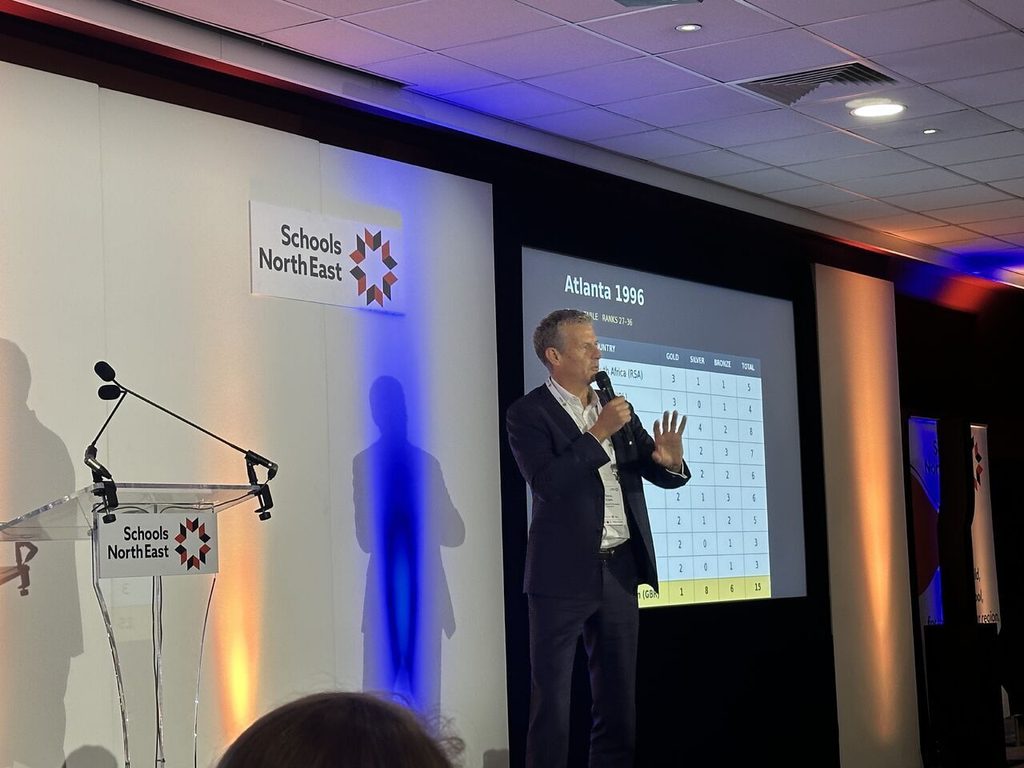
Building world-class talent takes more than individual ability. It requires the right opportunities and support from an early age, North East sporting legend Steve Cram told delegates at the Schools North East Summit 2026.
Drawing on his journey from Jarrow to the world stage, the former World and European Champion explored how strong local foundations helped shape sporting success, and what policymakers could learn from elite sport when looking to improve outcomes for children and young people.
His keynote, Building a World-Class System: What Policymakers Can Learn from Elite Sport, reflected this year’s Summit theme, Mission North East: A Region United for Change, and the importance of creating the conditions for talent to thrive across the region.
How sporting talent develops
Steve’s own journey from Jarrow to international sporting success provided a starting point for examining how talent develops. His experience, alongside the transformation of Britain’s Olympic sporting system, highlighted the importance of the structures supporting athletes throughout their development.
Producing world-class performers requires more than identifying individuals with exceptional ability. Young athletes need opportunities to participate, access to facilities and the support to progress as their skills develop.
For policymakers, the lesson is that lasting improvement requires investment in the foundations of success, not just a focus on results.
Building from the ground up
A central theme of Steve’s keynote was the importance of developing a connected sporting environment.
Schools, clubs, coaches and sporting organisations all have a role in creating opportunities for young people, with effective pathways helping them progress from initial participation towards higher levels of performance.
The availability of facilities and support services also influences who can take part and how far they can develop.
A strong sporting culture begins within communities, where children first encounter opportunities to participate and discover their abilities. Developing these foundations requires sustained investment and cooperation between the organisations involved.
Lessons for education
There are clear parallels here with education, particularly in the North East, where we have long argued that what happens outside the school gates matters just as much as what happens within them.
A child’s opportunities are shaped by where they grow up and the support available to them, from health services and transport to specialist provision and community facilities. These are the inequalities at the heart of the region’s ‘structural divide’, which we have consistently worked to bring to the attention of policymakers.
Our schools do an enormous amount to support children facing these challenges, often stepping in where other services fall short. But there is only so much they can do without the right support around them.
Creating the conditions for success
Steve’s comparison with elite sport raises a question for education policymakers: are we investing enough in the opportunities and support that children need before their potential becomes obvious?
In sport, facilities, coaching and development pathways help determine who gets the chance to progress. In education, access to specialist services, transport and opportunities outside school can make a similar difference.
It’s an argument that resonates with Schools North East’s work on the region’s structural divide, but Steve’s own story also offers a reminder of what is possible.
His journey from Jarrow to the world stage shows that talent can emerge anywhere. The challenge is making sure a young person’s postcode doesn’t determine how far they can take it.