
Forty years of competition in education must give way to collaboration, says Jonny Uttley
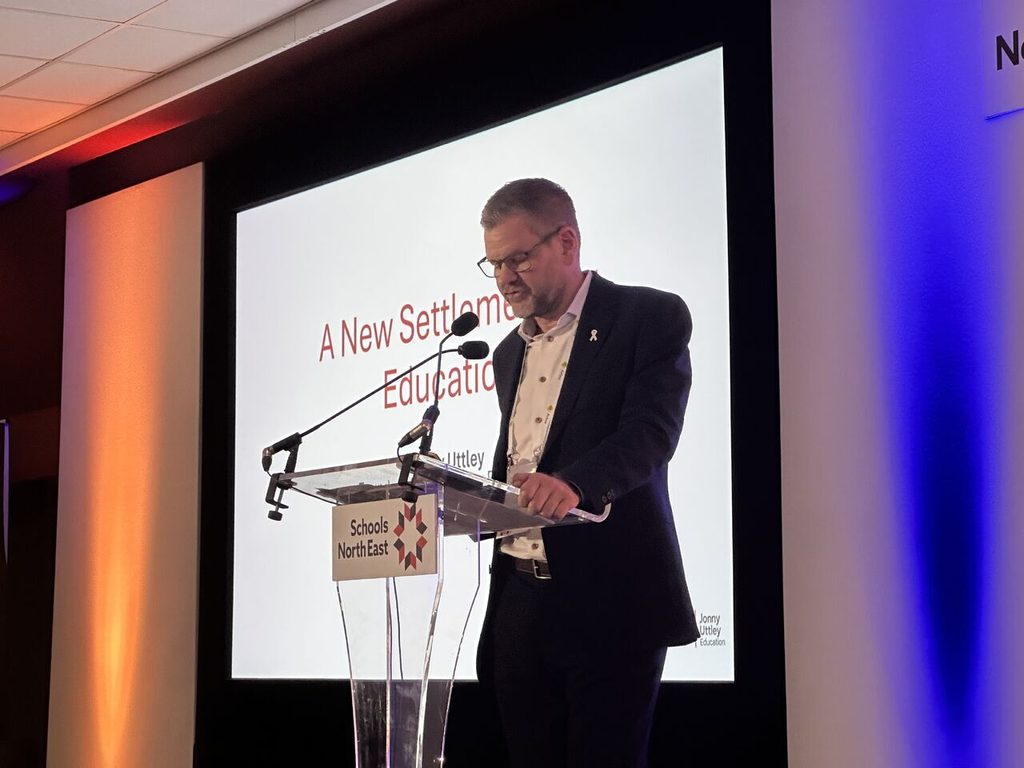
After four decades of education policy focused on competition between schools, it’s time to rethink how we improve outcomes for children and young people, Jonny Uttley told delegates at the Schools North East Summit 2026.
In his keynote, A New Settlement for Education: Why We Need a New Theory of Place-Based Improvement, Jonny made the case for greater collaboration between schools and local services, with shared responsibility for the outcomes of all young people.
His proposals included local accountability frameworks, a duty for schools to collaborate and greater powers for communities to shape education provision, reflecting the wider ambitions of this year’s Summit theme, Mission North East: A Region United for Change.
Challenging four decades of education policy
Jonny argues that, since the Education Reform Act 1988, England’s education system has increasingly been shaped by parental choice, competition between schools and performance measures.
While acknowledging the improvements in school leadership and teaching over that period, Jonny challenged the consequences of what he described as “zero sum toxic hyper competition”.
His presentation highlighted practices including excessive exclusions and suspensions, pupils being moved into alternative provision and the manipulation of admissions. He also questioned whether existing accountability arrangements adequately consider what happens to children who leave a school’s roll.
“An institution’s figures can improve while a young person’s prospects deteriorate.“
Looking beyond individual school performance
Jonny highlighted evidence of the unequal experiences of vulnerable pupils.
Children with a child protection plan are eight times more likely to be permanently excluded, while pupils receiving free school meals are 2.5 times more likely to be in alternative provision.
These figures raise questions about whether a system focused heavily on individual institutions is doing enough for children whose needs are most complex.
Inclusion and SEND have been major priorities for Schools North East, with school leaders across the region raising concerns about growing levels of need, delays in accessing specialist support and the pressure on mainstream and alternative provision.
Through our engagement with policymakers, we argue that schools must be supported by the wider services children depend on. Attendance, mental health, poverty and SEND cannot be addressed by schools working in isolation.
Jonny’s proposals raised a related question: how should schools and other services be held accountable for the outcomes of children across an area, including those who move between settings or leave mainstream education?
A new settlement for education
Jonny’s proposed settlement would retain the strengths of effective schools and trusts while giving local democratic leadership a greater role in bringing organisations together.
Schools, local authorities and other partners would work towards shared outcomes, with clearer responsibilities and funding to support delivery.
Accountability would consider whether young people are learning, attending and included, alongside their health, safety and opportunities after leaving education.
His proposals also included stronger technical and creative pathways, drawing on lessons from the Netherlands, where vocational education and employer involvement form part of a more coordinated approach.
Central to his argument was the need for local areas to have the powers and resources to make collaboration work, rather than relying on schools and other organisations to coordinate services without the means to do so.
From school improvement to place improvement
Jonny’s proposals connect with a longstanding concern for Schools North East: schools are judged on outcomes influenced by services and circumstances beyond their control.
We’ve taken evidence of those pressures to Parliament, the Department for Education and other national bodies. But Jonny’s keynote posed a further challenge. If schools, local authorities and other services all affect a child’s chances, how should responsibility for those outcomes be shared?
It’s a question that matters particularly for vulnerable pupils, including those moving between mainstream schools, alternative provision and other settings.
After four decades of policy focused heavily on individual institutions, Jonny argued that the next phase should be concerned with the success of whole communities.
His closing message captured that ambition: “The next forty years must be organised around how communities thrive.”