
Curriculum Conference 2026
Glow UK
THIS IS A PAST EVENT
In the simplest terms, ‘curriculum’ is a description of what, why, and how students should learn within schools. However, in reality, it includes so much more. Effective curriculum planning is an ongoing process of reflection, evaluation, and adaption, ensuring it meets the needs of every learner.
The Schools North East Curriculum Conference offers an invaluable opportunity for school leaders, educators, and curriculum specialists to collaborate, exchange ideas, and explore strategies for creating a broad and enriching curriculum. The conference will explore how we can design learning that prepares every young person for future life and work. Sessions will focus on ensuring high standards for all pupils, giving schools and teachers the space to innovate beyond the curriculum, and equipping students with the knowledge, skills, and experiences they need to thrive in a rapidly changing world.
The event has seen remarkable growth since beginning in 2020, with over 300 delegates from across the North East attending last year alone.
Attendees will benefit from insights shared by leading practitioners, academic experts, and fellow educators from North East schools, centred around the vital topic of curriculum development. The Schools North East annual Curriculum Conference also serves as an excellent occasion to connect with peers across the region, creating a community of shared best practice.
Who should attend?
- Head Teachers and Deputy Head Teachers
- School and Trust Senior Leaders
- Middle Leaders
- Curriculum Leads
- Teaching & Learning Leads
- Teaching Practitioners
Event Organiser

Event Main Sponsor

Event Overview

Gary Aubin
SEND Consultant & Director of SEND, Whole Education
Gary Aubin is the author of The Lone SENDCO, a handbook of 300 questions and answers for busy SENDCOs, and The Parent’s Guide to SEND. He is the Director of SEND Programmes and Networks for Whole Education and served on the Labour Government’s Curriculum and Assessment Review panel.
Gary is also the Education Endowment Foundation’s SEND Associate. In this role, he has worked extensively on sharing the evidence base behind high-quality teaching for SEND, as well as advised on the development of the SENCO NPQ.
As a Consultant, Gary has spoken internationally, advised the BBC, written content for the National Institute of Teaching and given talks to hundreds of Trust, Local Authority and school audiences.
Gary led on SEND provision for a Multi Academy Trust of 10 primary and secondary schools for several years. He is a secondary teacher, former primary and secondary SENDCO and former secondary Head of Year. Gary also authors the SENDMattersUK blog.

Lee Elliot Major
Professor of Social Mobility, University of Exeter
Lee Elliot Major OBE FAcSS is Britain’s first Professor of Social Mobility, based at the University of Exeter. He advises education, government and corporate leaders across the world on enabling people from all socio-economic backgrounds to flourish in life whatever path they choose. He was formerly CEO of the Sutton Trust, the UK’s leading social mobility foundation.
His award winning books include Social Mobility and Its Enemies and Equity in Education. His forthcoming book Cracking the Class Codes is due out in 2026. Lee lived on his own from age 15 and once worked as a bin-man and was first in his family to go to university. He was awarded an OBE for services to social mobility.

Michael Kane
Policy Manager & Education Practice, Public First
Michael Kane is a Policy Manager in Public First’s Education Practice. At Public First, he works directly on the Commission for Countering Online Conspiracies in Schools and works across policy, advocacy, research and communications to support the project. Before joining Public First, Michael worked in policy and advocacy for a school attendance charity and worked for a political monitoring company, working with clients from across the education and skills sector. He holds a first-class honours degree in Politics from Newcastle University and a distinction in Political and Legal Theory MA from the University of Warwick.

Kahil Ali
Programme Director, Centre for Digital Information Literacy in Schools
Kahil Ali is Programme Director for the Centre for Digital Information Literacy in Schools (CDILS), which is housed within the National Institute of Teaching (NIoT). Prior to joining CDILS, Kahil served as a Physics teacher in East London, progressing into senior leadership before moving to Freetown, Sierra Leone, to lead a network of 10 schools. He then held senior roles in Sierra Leone’s government, overseeing multi‑million‑dollar education, technology and human‑capital programmes, and leading partnerships with organisations including UNICEF, the International Finance Corporation (IFC) and the Massachusetts Institute of Technology (MIT). He holds a Bachelor’s degree in Aerospace Engineering from Queen Mary University of London, as well as a PGCE in Secondary Physics and a Master’s in Education Policy from UCL Institute of Education.

Jonathan Ferstenberg
School Improvement Partner, Trainer & Leadership Coach, Bespoke School & Leadership Development
Jonathan has over twenty-five years of highly successful school improvement experience, including as a MAT Director of School Improvement, Head Teacher, Academic Deputy Head, Head of Sixth Form, Head of Personal Development Studies and Head of RE. He has delivered a wide range of well-received CPD and spoken at conferences both locally and nationally. He now runs Bespoke School and Leadership Development, which helps leaders to develop great schools through collaborative reviews, training and coaching.

Helen McStravick
DfE Media & Financial Literacy Policy Lead
Helen McStravick is an experienced education leader passionate about helping young people develop the skills they need to thrive. She currently leads work on media and financial literacy, and is working on developing these skills throughout the National Curriculum with an emphasis on critical thinking and practical life skills. Previously, Helen headed policy on equality and political impartiality at the Department for Education, guiding schools through complex and sensitive issues. Alongside her professional role, she serves as Chair of Trustees for a community education charity and Vice Chair of Governors in a disadvantaged area of Newcastle, bringing a strong commitment to equity and opportunity. Helen combines strategic expertise with a deep belief in empowering learners to make informed choices in an ever-changing world.

Wayne Harrison
Co-Founder, WhatWorked Education
Wayne is the co-founder of WhatWorked Education, a research fellow at Durham University and started his career as a secondary science teacher in the North East of England. He completed an ESRC funded MA in research methods and PhD at Durham University, developing an innovative approach to building evidence in education through the use of teacher led micro-RCTs and aggregating the data into a cumulative evidence base. He is leading the work on building a regional evidence base for schools in the North East of England through a project with the North East Combined Authority.

Elisabeth Lee
Head Teacher, Seaham Trinity Primary School
Elisabeth has taught for 34 years in a wide range of schools across diverse socio-economic contexts and served on four senior leadership teams prior to securing her first headship. In 2020, she took a planned break from headship following a medical diagnosis and, after successful treatment, was able to get back to work. She worked as an Advisor for a Virtual School, a role she held for 18 months, before returning to her preferred position: headship.
She has a strong and sustained interest in educational research, developed through the completion of her Master’s degree in 1998, where she focused on classroom practice. This work established the foundation for her ongoing commitment to evidence-informed pedagogy and the development of effective teaching and learning. She has delivered the NPQH with Best Practice Network in partnership with Education Durham and has extensive experience in, and a genuine passion for, delivering high-quality professional development, with a current focus on developing her coaching skills.

Natalie Snowdon
Deputy Head Teacher, Bluecoat Primary School
Natalie is a deputy head teacher currently working in a junior school in Durham. She has over 20 years of teaching experience in primary schools. For the first part of her career, she was a primary teacher in California before moving to Durham.

Alex Fairlamb
Trust Teaching & Learning Coach, and Educational Consultant
Alex Fairlamb is a Trust Teaching and Learning Coach and an Education Consultant, a former Senior Leader of T&L, PD and Literacy and Oracy and a former Trust T&L Network Lead. Alex is an Honorary Fellow of the Historical Association, a Fellow of the Chartered College of Teaching and a member of the Festival of Education Advisory Panel. Alex co-wrote 'The Scaffolding Effect' and co-edited 'What is History Teaching, Now?' with Rachel Ball.

Stuart Mayle
Head Teacher, Brambles Primary Academy
Stuart is a school leader who has been a leader of teaching and learning for many years, from English Lead to Assistant Head Teacher and a Deputy Head Teacher responsible for Teaching, Learning and Assessment. He was Acting Head Teacher from October 2023 and was appointed to the substantive role of Head Teacher in January 2025. He has a passion for Teacher Education, Leadership Development and Character Education. Specifically, how Character can be used to enhance the curriculum offer, the life experiences of children particularly in areas of high disadvantage and foster a sense of belonging within the school and wider community.

Paul Wright
Lead Practitioner (Computer Science), Ponteland High School
Teacher, author ('100 Ideas for Stretch & Challenge, Teach, Reflect and Doodle' - Bloomsbury Publishing) and Educator for nearly 20 years in Northumberland, Bedfordshire and Oxfordshire.
Currently teaching at Ponteland High School and delivering staff and ITT CPD.

Danny Kilkenny
Deputy Head Teacher & SENCO, Kepier
Danny started teaching in 1999 at Kepier as an NQT in the History Department. He then moved on to be Assistant Head Teacher in charge of Teaching and Learning, and then Deputy Head Teacher. HE completed his SENCO qualification in 2021.
Since the qualification, Danny has supported colleagues from Sunderland University writing chapters in books around SEN provision and has worked on SEN projects for National Teaching and Learning providers such as Pixl.
This last academic year Danny has worked on secondment with Sunderland Local Authority to support the development of SEN provision across the city.

Kathleen McBride
Head of Learning, Voice21
A former teacher and curriculum leader for English, Kathleen joined Voice 21 in 2018 and has been championing oracy ever since - developing a wealth of experience in oracy implementation at both classroom and whole school level. As Head of Learning, Kathleen leads projects that develop a deeper understanding of the impact of oracy in different contexts.

Vicki Page
Deputy Headteacher, Cotsford Primary School
Vicki Page is the Deputy Headteacher at Cotsford Primary School and an experienced senior leader with 17 years in education. Formerly a Literacy Specialist, Vicki has a strong track record of supporting schools and strategically designing support packages to strengthen teaching and learning across the curriculum. She has a deep understanding of early language development and is passionate about developing a strong reading culture and raising writing standards, with
particular expertise in phonics. For the past three years, Vicki has led Oracy at Cotsford, working closely with Voice 21 to develop and embed a high-quality Oracy education that elevates the curriculum and ensures every child has a confident, purposeful voice.
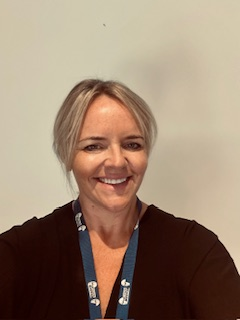
Alice Crozier-Green
Head of Services, Raedwald Trust
Alice Crozier-Green is a dedicated educator with over 25 years of experience across mainstream secondary education, special educational needs, and international teaching. She currently serves in a leadership role at the Raedwald Trust in the United Kingdom—an innovative partnership of Alternative Provisions and bespoke pathways designed to support children and young people who require a different route to success. She graduated with a degree in English, Media, and Education and holds a secondary PGCE in English and Drama, which formed the foundation of her long career. She began her career teaching English as a Foreign Language in India, followed by a long (and ongoing) career in South East England teaching English across a range of secondary schools and alternative provisions. Her enduring passion lies in working with students with special educational needs, a commitment that has shaped her educational philosophy and practice. At the Raedwald Trust, she works closely with colleagues to improve outcomes for students who have not always had the best start in education—focusing on the power of reading and a curriculum that is responsive to the lived experiences of each learner. A champion of inclusive and student-centred education, she believes in celebrating the individuality and potential of every young person, and is deeply invested in reimagining education through empathy, equity, and innovation.

Richard Child
Education Sales Manager, MCC Digital
Richard Child is the Education Sales Manager at MCC Digital. With a strong background in education technology, he's dedicated to helping schools implement the right solutions to achieve their goals. His career in the tech sector began in the late 1990s, and since 2017, he had the privilege of leading the Education Team at MCC Digital. He works closely with schools to provide innovative tools that support both educators and students, with a focus on driving positive outcomes through technology. He's passionate about advancing education and making a lasting impact on the way technology is used in classrooms.

Peter King
Trustee, Schools North East
Pete has been a North East Head Teacher for twenty years. He has also served as NAHT branch secretary, chair and vice of the local school forum and a school improvement partner.
Pete is a strong advocate for Schools North East and values the collaborative work done between the charity and the schools in the region. He brings his knowledge and experience to the role of trustee after sitting on the advisory board for a number of years.

Chris Zarraga
Director, Schools North East
Chris is the Director of School North East. He has been part of the Schools North East team since its operational inception in 2008 and in 2019 he was appointed Director. Chris works with senior leaders across the North East and nationally in the education and charity sectors, to represent the voice of North East schools. A central part of his work is to lobby politicians, policy makers, and the media to put a strong ‘regional accent’ on the education debate, so that North East schools are not left behind when it comes to education policy.
Under Chris, Schools North East launched the ‘Manifesto for North East Education’. The manifesto sets out the perennial challenges that impact educational opportunities in the North East and the principles needed to inform any educational policy wanting to address them.
Chris works with hundreds of schools across the North East and various organisations including Ofsted, the DfE, the North East’s universities, Local Authorities and various regional/ national businesses. Prior to joining Schools North East, he led a £1.4 million culture change project in education across the North East for the Treasury and DfE and was responsible for setting up a multi-million pound Enterprise Education Network.
Chris sits on various advisory boards including the NHS Integrated Care Boards, various Combined Authority advisory boards, and was a member of the DfE’s Opportunity North East strategic board. He has also sat on various boards for North East Universities. As well as being a Director of two North East multi academy trusts, Chris has been Chair of a 3 school Trust, Vice Chair of a large maintained secondary school and Vice Chair of a primary foundation school.
In a variety of roles from Regional Manager to Chief Executive to Board member, Chris has led large scale change management projects in education and has over 20 years’ experience of strategic management, consultancy, and client development experience at a ‘Big Four’ firm and various financial institutions.
Chris holds an MBA with distinction from Durham University Business School.
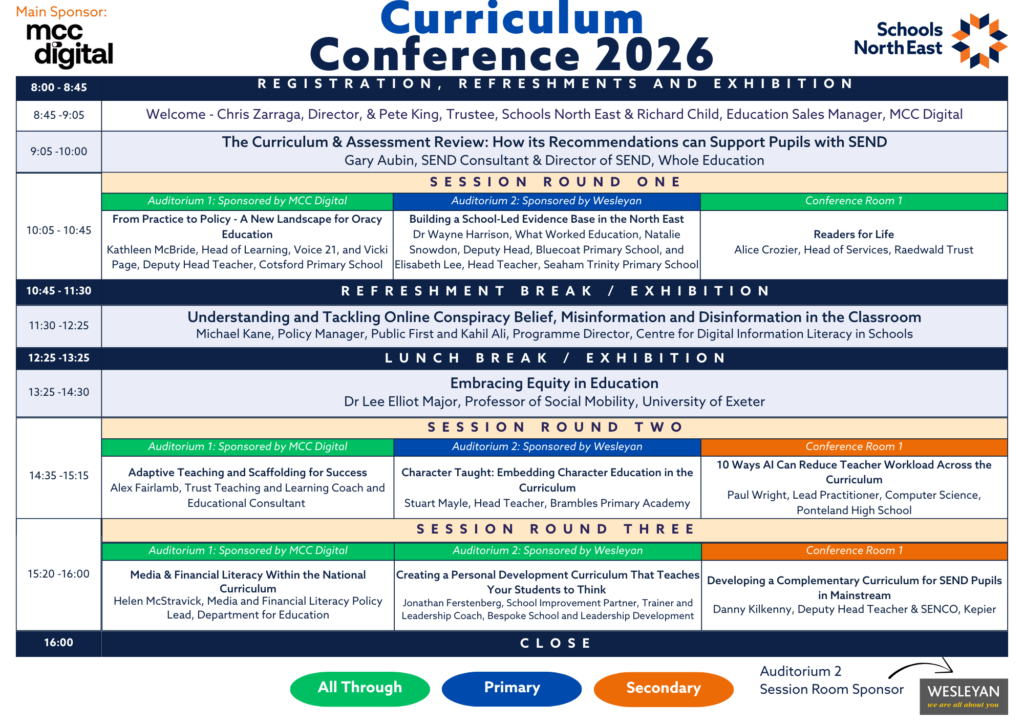
The Curriculum & Assessment Review: How its recommendations can support pupils with SEND – Gary Aubin, SEND Consultant & Director of SEND, Whole Education
- An overview of the recommendations that may have particular pertinence to the education of pupils with SEND
- The interplay between Curriculum and Assessment, and wider factors, in shaping inclusive education
- How schools leaders might prepare now for the proposed changes ahead
Creating a Personal Development Curriculum That Teaches Your Students To Think – Jonathan Ferstenberg, School Improvement Partner, Trainer & Leadership Coach, Bespoke School & Leadership Development
This session will include:
– The government’s Relationship, Sex, Health Education curricular changes for September 2026
– Basing your curriculum and lessons around ‘key questions’
– Practical strategies for engaging lessons
– Using assessment well
– Supporting students with SEND
– Links to Spiritual, Moral, Social and Cultural development and Citizenship
– Local context; working with pastoral and safeguarding leads
Character Taught: Embedding Character Education in the Curriculum – Stuart Mayle, Head Teacher, Brambles Primary Academy
The session will outline some of the key elements of developing character education in schools considering the Jubilee Centre’s model of Character Caught, Taught and Sought. Then using Character Taught as a vessel, we will investigate how core values can be embedded across the curriculum to impact on people, learning and community engagement.
10 Ways AI Can Reduce Teacher Workload Across the Curriculum – Paul Wright, Lead Practitioner, Computer Science, Ponteland High School
This practical session, described as “training every teacher should be given each September,” will demonstrate 10 easy-to-implement ways to leverage AI tools. By drastically reducing repetitive tasks like differentiation, resource generation, and assessment, teachers can reclaim time. This allows educators to focus on high-impact teaching, and ensuring high standards for every pupil across the curriculum, particularly those with SEND. Teachers and Leaders will walk away with real, usable strategies to positively impact wellbeing and deliver equitable outcomes.
Media & Financial Literacy within the National Curriculum – Helen McStravick, DfE Media & Financial Literacy Policy Lead
This session will focus on the Department for Education’s work on developing media and financial literacy throughout the National Curriculum, an area of focus in the Curriculum and Assessment review. Helen McStravick will outline current priorities and approaches to strengthening pupils’ critical thinking, digital discernment, and practical financial skills across subjects.
Helen will also be looking to capture feedback from delegates on where the Department of Education are in refreshing the curriculum and ensuring media and financial literacy are embedded within it, giving delegates an opportunity to contribute their perspectives and shape next steps.
Developing a Complementary Curriculum for SEND Pupils in Mainstream – Danny Kilkenny, Deputy Head Teacher & SENCO, Kepier
This session will aim to give practical examples of how mainstream schools can design and deliver a complementary curriculum that supports SEND pupils through holistic skill development and preparation for adulthood.
Danny will explore how schools can design, implement and track this type of curriculum within a mainstream setting and share concrete ideas of how this complementary curriculum will fit into the new Ofsted Framework on Inclusion, the recent DfE Curriculum and Assessment Review and their Preparation for Adulthood report.
Adaptive Teaching and Scaffolding for Success – Alex Fairlamb, Trust Teaching & Learning Coach, and Educational Consultant
Inclusive teaching and learning strategies are part of the answer to ensuring that education is equitable and equal for all. This session will explain why teaching to the top is vital for our children, outline what adaptive teaching is and showcase a variety of scaffolding strategies which support the learning of all students. Drawing upon key research, the session will outline practical adaptive teaching and scaffolding techniques supported by examples and common pitfalls.
Understanding and Tackling Online Conspiracy Belief, Misinformation & Disinformation in the Classroom – Michael Kane & Kahil Ali
The Commission into Countering Online Conspiracies in Schools – the largest study of its kind in English schools – will share findings from its extensive research with young people, school staff and parents across the country into the issue of online conspiracy theories, misinformation and disinformation.
The session will explore how conspiracy theories, misinformation and disinformation are showing up in classrooms, how they are shaping pupils’ beliefs and behaviour, and the ways in which teachers and school leaders are addressing this challenge. It will conclude with Pip Sanderson, Director of Teacher Development at the National Institute of Teaching and Head of the Centre for Digital Information Literacy in Schools (CDILS), outlining the Centre’s emerging work and support for schools.
From Practice to Policy: A New Landscape for Oracy Education – Kathleen McBride, Head of Learning, Voice 21 & NE School Representative
In this session, Kathleen will share how the Voice 21 Oracy Schools Programme supported the recognition of the importance of oracy in November’s Curriculum and Assessment Review report and what this means for the future of oracy education. Kathleen will be joined by one of the schools from the Voice North East project who will share their approach to implementing oracy across the curriculum and the impact this is having on the school community.
Building a School-Led Evidence Base in the North East – Wayne Harrison, Elisabeth Lee, Natalie Snowdon
Micro-randomised controlled trials (micro-RCTs) represent a new frontier in educational research, offering a way for teachers and schools to identify what works within their unique contexts. Rather than relying solely on large-scale, top-down studies, micro-RCTs empower educators to test interventions rapidly, gather reliable data, and make informed adjustments on the ground. In this session, we will trace the development of these in education and how a teacher-driven micro-RCT approach fits into the educational evaluation landscape. We will showcase our collaboration with the North East Combined Authority and local schools, where teachers are running micro-RCTs to refine interventions, improve pedagogy, and foster evidence-informed decision-making. By highlighting the potential of these small but rigorous experiments, attendees will gain a clear blueprint for adopting micro-RCTs in their own schools, ultimately creating a more responsive, impactful, and data-rich learning environment.
Readers for Life – Alice Crozier-Green, Head of Services, Raedwald Trust
Designing a fully inclusive reading curriculum that was research led, and evidence informed. One which would reach right into the pedagogies practiced in mainstream, hospital and Special Educational Needs classrooms across the globe.
An introduction to a reading curriculum model that is research led and has evidence informed pedagogy built within its infrastructure. Our universal reading curriculum is built on three pillars of vocabulary instruction; fluency instruction; and comprehension stimulated by a rich and diverse literature spine to engage vulnerable and disadvantaged students.
Embracing Equity in Education – Lee Elliot Major, Professor of Social Mobility, University of Exeter
The equity approach strives to address class barriers in schools, encouraging us to look at children not through a lens of deficit—what they lack—but through a lens of capacity—what strengths they bring. It focuses on removing obstacles to learning and acknowledging the class biases and barriers we create in schools. This includes replacing unhelpful labels such as ‘disadvantaged pupils’, removing cultural and material barriers, and nurturing mutually respectful relationships with parents. Equity best bets, based on syntheses of research and expert practitioner knowledge, offer teachers practical strategies to create a language, pedagogy, curriculum and partnership of equity.